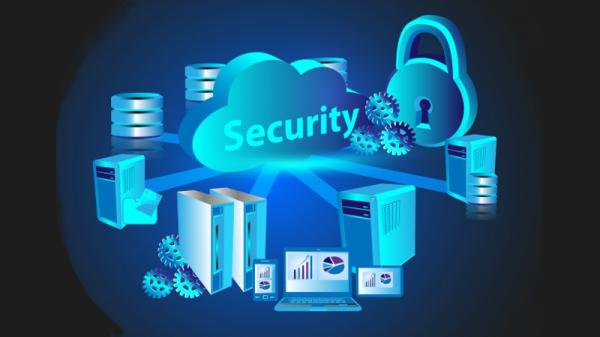
Using cloud services for data backup and storage is becoming increasingly common among businesses of all sizes. According to Richard Vester, Director of Cloud Services at EOH, hardware-based storage was long the favoured option because companies looked to protect their data from hacking and loss of privacy. That control is now easily accessible through cloud-based options, which is far more cost-effective.
Showing posts with label Security Services. Show all posts
Monday, 21 March 2016
Cloud: the future of storage is here
Using cloud services for data backup and storage is becoming increasingly common among businesses of all sizes. According to Richard Vester, Director of Cloud Services at EOH, hardware-based storage was long the favoured option because companies looked to protect their data from hacking and loss of privacy. That control is now easily accessible through cloud-based options, which is far more cost-effective.
Tuesday, 9 February 2016
Cato Cloud aims to simplify network security
The growth of distributed enterprise networks and changes in traffic patterns as data moves to the cloud has presented companies with problems in ensuring that all of their information and endpoints are properly protected.
To address this, Israeli company Cato Networks is launching its new network security as a service (NSaaS) platform. Cato Cloud is aimed at making network security simple and cost-effective for the distributed, cloud-centric and mobile-first enterprise.
Wednesday, 16 December 2015
3 key cloud trends for 2016
As the new year approaches, it's a good time to look forward to what the key trends will be, so we can take advantage of them thoughtfully and effectively.
Here are three key cloud trends I'm certain you'll see unfold in 2016.
Trend 1: The continued rise of cloudops
Cloudops is anything to do with operating systems in public or private clouds. It focuses on security, management, monitoring, and governance, as well as being proactive with how systems run over a long period of time.
Doing so means using predictive analytics to determine when performance will become an issue, or when you see patterns emerge that show the likelihood of a breach.
Trend 2: The continued explosion of containers
I've beaten the container horse to death in this blog, so I'm not going into the "what's a container" pitch (go here instead for the key container notions). They are growing in popularity because they push a commonsense approach to building new distributed applications in the cloud, as well as "containerizing" existing applications.
The good news is that containers are living up to expectations, including containers from Docker and CoreOS.
The bad news: There are still missing pieces, such as networking and security services, that need to be shored up before this stuff is completely enterprise-ready. Expect container technology providers and their partners to address most of the limitations in 2016.
Read More: http://www.infoworld.com/article/3014639/cloud-computing/3-key-cloud-trends-for-2016.html
Here are three key cloud trends I'm certain you'll see unfold in 2016.
Trend 1: The continued rise of cloudops
Cloudops is anything to do with operating systems in public or private clouds. It focuses on security, management, monitoring, and governance, as well as being proactive with how systems run over a long period of time.
Doing so means using predictive analytics to determine when performance will become an issue, or when you see patterns emerge that show the likelihood of a breach.
Trend 2: The continued explosion of containers
I've beaten the container horse to death in this blog, so I'm not going into the "what's a container" pitch (go here instead for the key container notions). They are growing in popularity because they push a commonsense approach to building new distributed applications in the cloud, as well as "containerizing" existing applications.
The good news is that containers are living up to expectations, including containers from Docker and CoreOS.
The bad news: There are still missing pieces, such as networking and security services, that need to be shored up before this stuff is completely enterprise-ready. Expect container technology providers and their partners to address most of the limitations in 2016.
Read More: http://www.infoworld.com/article/3014639/cloud-computing/3-key-cloud-trends-for-2016.html
Wednesday, 2 December 2015
Security Is Better With Cloud Providers
The financial services industry is, after much wringing of hands about data security, moving computing operations to the cloud to save money, improve operations, increase agility, gain access to large-scale resources and improve security.
Given the sensitive nature of client data, financial firms have been slow to adopt the public cloud, but resisting cloud deployment based on security fears is becoming more of a thing of the past. IT people tended to overestimate the security measures deployed within their own walls as well as their ability to contain customer-data breaches. A recent report on the state of the security industry report showed that one-quarter of all data breaches take organizations weeks, or even months, to contain. By contrast, large cloud providers have security teams, systems and tools constantly monitoring operations.
It’s the business of cloud providers to supply computing power that is secure both on the perimeter and inside the data center. So while an individual machine may be running month-end banking statements in the afternoon and seismic modeling for an oil and gas exploration late at night, the data is securely ensconced behind internal firewalls that protect each virtual machine. What’s more, cloud provider infrastructures that require certification are subject to regular audits from consulting firms that specialize in IT security.
The very complexity of cloud operations also provides a layer of security. Even if cyber criminals know the specific cloud provider an institution uses, they’d still have to find the right data center and gain access. Even then, there’s still substantial internal security left to breach. Businesses that store information on their own servers offer a comparatively easier target than those that use the cloud.
Read More: http://www.forbes.com/sites/tomgroenfeldt/2015/12/01/security-is-better-with-cloud-providers/
Given the sensitive nature of client data, financial firms have been slow to adopt the public cloud, but resisting cloud deployment based on security fears is becoming more of a thing of the past. IT people tended to overestimate the security measures deployed within their own walls as well as their ability to contain customer-data breaches. A recent report on the state of the security industry report showed that one-quarter of all data breaches take organizations weeks, or even months, to contain. By contrast, large cloud providers have security teams, systems and tools constantly monitoring operations.
It’s the business of cloud providers to supply computing power that is secure both on the perimeter and inside the data center. So while an individual machine may be running month-end banking statements in the afternoon and seismic modeling for an oil and gas exploration late at night, the data is securely ensconced behind internal firewalls that protect each virtual machine. What’s more, cloud provider infrastructures that require certification are subject to regular audits from consulting firms that specialize in IT security.
The very complexity of cloud operations also provides a layer of security. Even if cyber criminals know the specific cloud provider an institution uses, they’d still have to find the right data center and gain access. Even then, there’s still substantial internal security left to breach. Businesses that store information on their own servers offer a comparatively easier target than those that use the cloud.
Read More: http://www.forbes.com/sites/tomgroenfeldt/2015/12/01/security-is-better-with-cloud-providers/
Friday, 30 October 2015
Alibaba points to Singapore in response to cloud security concerns
China tech vendors inevitably face concerns about data and cloud security, especially in dealing with US customers, but Alibaba hopes to defuse potential doubt through its international headquarters in Singapore.
It also wants to remind customers that it is a US-listed company.
Speaking to ZDNet in an interview, Alibaba Group's vice president Yu Sicheng said: "First, China's international business is a Singapore business that is governed by a US-listed company. It follows Singapore laws in terms of data privacy as well as all commercial contracts involving those with our customers and partners.
LATEST NEWS ON ASIA
Zuckerberg visits India to boost Facebook numbers amidst Internet.org hiccups
Will your phone soon be free? DataWind announces $15 smartphone
OpenStack gathers momentum in Asia
Huawei ships 27 million smartphones in Q3
China Mobile joins South Korean fourth telco bid
"We just happened to be a US-listed company that is based in China," said Yu, who heads the vendor's cloud business outside of its domestic market. Currently based in Beijing, the executive is likely to move to the Singapore headquarters, which was announced earlier this year.
With relationships between China and the US particularly tensed over cyber hacking and spying allegations, tech vendors from the Chinese market often face customer concerns about data and cloud security.
Alibaba's cloud business in the US remains nascent and is starting from a small footprint, Yu said, noting that it had yet to encounter any security-related queries specifically associated with its China roots.
Read More : http://www.zdnet.com/article/alibaba-points-to-singapore-in-response-to-cloud-security-concerns/
It also wants to remind customers that it is a US-listed company.
Speaking to ZDNet in an interview, Alibaba Group's vice president Yu Sicheng said: "First, China's international business is a Singapore business that is governed by a US-listed company. It follows Singapore laws in terms of data privacy as well as all commercial contracts involving those with our customers and partners.
LATEST NEWS ON ASIA
Zuckerberg visits India to boost Facebook numbers amidst Internet.org hiccups
Will your phone soon be free? DataWind announces $15 smartphone
OpenStack gathers momentum in Asia
Huawei ships 27 million smartphones in Q3
China Mobile joins South Korean fourth telco bid
"We just happened to be a US-listed company that is based in China," said Yu, who heads the vendor's cloud business outside of its domestic market. Currently based in Beijing, the executive is likely to move to the Singapore headquarters, which was announced earlier this year.
With relationships between China and the US particularly tensed over cyber hacking and spying allegations, tech vendors from the Chinese market often face customer concerns about data and cloud security.
Alibaba's cloud business in the US remains nascent and is starting from a small footprint, Yu said, noting that it had yet to encounter any security-related queries specifically associated with its China roots.
Read More : http://www.zdnet.com/article/alibaba-points-to-singapore-in-response-to-cloud-security-concerns/
Monday, 26 October 2015
India's public cloud services to touch $730 million in 2015: Gartner
NEW DEL:HI: Public cloud services revenue in India is forecast to touch U$731 million by the end of 2015, growing more than 31 per cent over last year, research firm Gartner said.
High rates of spending on cloud services in India to continue through 2019 when the market is expected to reach USD 1.9 billion, Gartner said in a statement.
The revenues, which stood at $555 million in 2014, are expected to be driven by high growth rates in key market segments like cloud infrastructu as a service (IaaS), cloud management and security services and software as a service (SaaS), it added.
Gartner forecast spending on IaaS to total $100 million in 2015, an increase of 25 percent over last year.
Spending on cloud management/security will grow 36.6 per cent to $82 million, and SaaS will grow 33.4 per cent to $302 million this year, Gartner added.
"The forecast for cloud services vary based on local factors, including supply and demand within the local ma ..
Read More : http://economictimes.indiatimes.com/tech/software/indias-public-cloud-services-to-touch-730-million-in-2015-gartner/articleshow/49536888.cms
High rates of spending on cloud services in India to continue through 2019 when the market is expected to reach USD 1.9 billion, Gartner said in a statement.
The revenues, which stood at $555 million in 2014, are expected to be driven by high growth rates in key market segments like cloud infrastructu as a service (IaaS), cloud management and security services and software as a service (SaaS), it added.
Gartner forecast spending on IaaS to total $100 million in 2015, an increase of 25 percent over last year.
Spending on cloud management/security will grow 36.6 per cent to $82 million, and SaaS will grow 33.4 per cent to $302 million this year, Gartner added.
"The forecast for cloud services vary based on local factors, including supply and demand within the local ma ..
Read More : http://economictimes.indiatimes.com/tech/software/indias-public-cloud-services-to-touch-730-million-in-2015-gartner/articleshow/49536888.cms
Subscribe to:
Posts (Atom)